Showing posts with label serial. Show all posts

Tuesday, August 16, 2016

SERIAL PULP: The Spider's Web (1938), Chapter 6: SEALED LIPS

A co-production with the Mondo 70 movie blog... 

The Octopus's gangsters (led by Marc Lawrence) already think they've killed criminologist and amateur magician Richard Wentworth and are trying to take out The Spider with a falling spotlight as this chapter opens. Of course, Wentworth's (and The Spider's) lovely assistant Nita Van Sloan gives a timely scream to signal that The Spider should step out of the falling object's way. The thwarted gangsters make a fighting retreat, convinced that they were at least half successful until they see Wentworth walk out of the bus station turned theater. As Nita had explained earlier to the benefit organizers, the gangsters had shot at a projected image of Wentworth, apparently lacking any depth perception to help them detect the trick. To account for his absence during the mayhem, Wentworth claims that the gangsters had knocked him out and left him in his dressing room. No one finds this odd, considering that the gangsters had tried to kill him earlier. But never mind. My favorite thing about this whole scene is how baffled the organizers are by Nita's explanation of the projection trick. Should I explain in more detail how it worked? she asks. Cut to The Spider skulking outside. Back to Nita: "Now do you understand?" They may not, but they're not going to admit it.

The Octopus is strangely forgiving of this latest failure, given how casually he's killed failures earlier. A great general takes minor setbacks into account, he says before moving on to his next project: payroll robberies. Again in a peculiarly chipper mood, he promises big bonuses should the caper succeed. He has reason to be confident this time since he's got an inside man -- a woman, actually, -- at the bank. This receptionist can tap into executive calls to find out when money is arriving or departing. She then passes notes to The Octopus's man. Meanwhile, Wentworth has had the benefit tickets purchased by the gangsters checked for prints. One set matches a police file that gives Wentworth a name to work with. As Blinky McQuade, he finds this man to give him a tip that the police are going to tap his phones. Wentworth expects him to call his boss right away to stop all calls to this phone, and he's planted his minion Jackson in the place as a drunk to get the number. We've already seen Jackson display a now-obsolete talent for listening as someone dials a number on a rotary phone. He can identify each digit in the number by the time it takes the rotary dial to circle back into place. Once the crook finishes dialing, Jackson attacks him and knocks him out. Blinky reappears, now speaking with Wentworth's voice, to call the cops for a trace on the number, which turns out to be the Commerce Bank where that receptionist works.


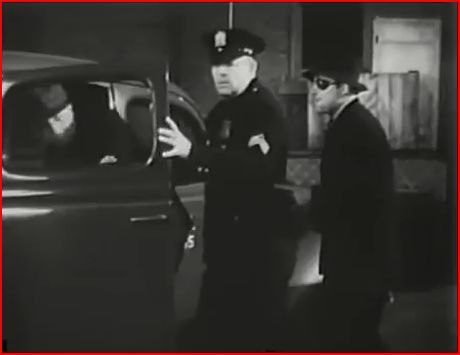
We've already met the receptionist. During the chase as the gangsters fled the bus station, their car clipped a newsboy and knocked him down in the middle of the street. Wentworth stops his car to help the lad, and the boy's older sister ends up being the crooked receptionist. After snooping on her method for relaying info to the Octopus, Wentworth and Nita snatch her off the street, Wentworth using the same finger-in-the-back technique that Blinky used on a cop a few chapters ago.


When Wentworth threatens the third degree, the receptionist faints. Since fainting is a girly thing, Richard asks Nita to verify that the girl isn't shamming. No she isn't, it turns out; the poor thing is scared to death and Wentworth didn't even have to put on his Spider outfit. Needless to say, the receptionist is a good girl at heart who was embroiled in a wiretapping scheme some time ago that left her subject to a gangster's blackmail. It looks like she and her Wentworth-idolizing brother are going to stick around as supporting players for a while, whether we like it or not.


Meanwhile, The Octopus's men pull off the robbery but the gangster who'd been blackmailing the receptionist is killed in a shootout. That hard-luck newsboy is practically trampled by a fleeing gunman, but recognizes the man as a nearby garage worker. Wentworth is exultant at an apparent big break and gathers Jackson and Ram Singh for a stakeout of the garage. They find some gangsters driving away, apparently to deliver the bank loot someplace. The good guys follow but are eventually made by the suspicious gangsters, who start firing bullets and lobbing grenades at the pursuing vehicle. Wentworth changes to The Spider and prepares for a car-to-car attack. There's one long shot shot of the car stunt shot on location, but most of the action in both cars is done with process shots. The gangster car goes out of control once The Spider jumps on board and crashes into an electrified power-plant fence for our cliffhanger. This episode again shows the above-average competence of the Octopus gang, since they score another win with the bank robbery, and despite plenty of action the focus this time is more on detective work. The episode is slowed a bit by the need to introduce two possibly major new characters but it's still pretty good. If you're really worried about The Spider's fate, we'll have the answer for you sometime next week.

Thursday, July 21, 2016

Serial Pulp: THE SPIDER'S WEB (1938) Chapter Four: SURRENDER OR DIE!

A co-production with the Mondo 70 movie blog...
At the end of Chapter Three of this Columbia Pictures adaptation of Norvell Page's pulp hero, Richard Wentworth was knocked into a mean looking power-plant thingy that turned explosive on impact. At the opening of this chapter, after the narrator's usual long-winded recap -- he has to talk over all the footage from last week's climax -- Wentworth, aka The Spider, simply gets better and gets out of Dodge when the cops show to disrupt The Octopus's plan to black out the city. By now, Wentworth has figured out that The Octopus is no common gangster, but represents "organized crime with more than money as a goal. He wants control." He specifically wants control of utilities, having first muscled into transportation and more recently targeted electrical power. That The Octopus is engaged in "terrorism" rather than mere crime is in keeping with the apocalyptic tone of the Popular Publications pulps, though whether the villain can keep escalating his attacks like his print counterparts remains to be seen.


Out of nowhere Wentworth gets a potentially important lead from a young friend of his, the gas station operator and ham radio enthusiast Charlie Dennis. In The Spider's day a ham radio operator was as close as you could get to a computer hacker today, and Charlie has inadvertently hacked into the Herzen Band, a frequency outside the range of most radios on which the gas jockey is picking up inscrutable, apparently coded transmissions. Wentworth transcribes a typical broadcast and has his old war buddy Jackson set about deciphering the code. Charlie has instantly become an important asset for the good guys, but The Octopus's men have detected the hack somehow, and their master orders Charlie eliminated. So we have this episode's plot wrapped up: The Spider will have to save Charlie from the bad guys....except that he doesn't. In fact, Wentworth and his pals are completely clueless about Charlie's imminent doom and make no effort to protect what could have been a crucial source of intelligence on The Octopus's activities. In a flawless victory for the villain, Charlie is murdered and his gas station (and all-important radio) blown up with Wentworth none the wiser.


The main characters never even acknowledge that anything has happened to poor Charlie, though I have to imagine that the Herzen Band will become important again later. To be fair, our heroes have their own security to think about, since The Octopus's goons are still stalking Wentworth. Two of them jump Richard outside his hotel suite. He fights them off but finds that Nita and Jackson, whom he'd left in the suite, have been snatched, the snatchers leaving behind a note telling Richard to expect a message from The Octopus.


The mystery villain has several balls in the air. While trying to outmaneuver Wentworth, he's also plotting to take out all the city's radio stations so he can monopolize the airwaves when making his demands. The broadcast gives Wentworth and Ram Singh a chance to use their triangulation machines to pinpoint the source of the transmission, which they expect to be The Octopus's lair and their friends' prison. Finding the likely spot, they break through an electrified fence and prepare for a two-pronged attack on the building. Despite being warned to be careful, the mighty Ram Singh promptly gets KOd while skulking in the bushes and joins Nita and Jackson in chains in a cell.


This place proves to be some kind of torture house. The cell is rigged to fill with water in order to drown its prisoners.While they thrash about in vain and the water rises, The Spider enters another end of the house and surprises a bunch of gangsters. For some reason he surrenders his advantage of surprise to hunker behind a toppled table, content to trade shots with the surviving goons until one quick-thinking, courageous bad guy closes a door to trap The Spider in a room with a gas bomb. As if that wasn't bad enough, this room is rigged to release a lethal volume of steam. A double cliffhanger closes an episode that has not gone well for the good guys. It's good at holding our interest, however, since it shows The Octopus and his men as more effective serial villains than we typically see. We'll see how long that lasts....

Thursday, July 14, 2016

Serial Pulp: THE SPIDER'S WEB (1938), Chapter Three: HIGH VOLTAGE

A co-production with the Mondo 70 movie blog.

The resolution of last episode's cliffhanger was set up when we saw Richard Wentworth's henchman Ram Singh monitoring the situation in the Adams office as Wentworth, The Spider, prepared to rescue his girlfriend Nita Van Sloan. Once the faithful Sikh saw that The Octopus's men had set a deathtrap for The Spider, he rushed to the building. After the recap, this episode opens with Ram arriving just in time to help fellow flunky Jackson get the mechanical hoist back in control so Nita and The Spider have an easy last leg of their trip to the ground. After seeing Nita off, The Spider re-enters the building to fetch Adams from a vault in order to interrogate him about The Octopus. As he drives away, more minions take up the pursuit. The Spider exhorts Adams to jump from the car before it goes over a cliff, but Adams is no Spider and burns with the vehicle.

Some of Richard Wentworth's victims bear "the mark of The Spider."

Inevitably, The Spider is blamed for the neophyte traction magnate's murder, provoking a hissy fit from Wentworth."All because a few thugs are killed, the cry goes up: Get the Spider!" he complains, "Every time The Spider strikes, all they see is the act. Never a thought for the real reason behind it." Wentworth is more thin-skinned a crimefighter than The Green Hornet, for instance, who wants to be thought of as a criminal, since that makes it easier for him to move through the underworld. But pity party over, it's back to work. "I've got to find the Octopus, and destroy him," our hero resolves.

Civilian life is no shelter for Richard Wentworth as it is for other costumed crimefighters. Since Wentworth himself is known as a criminologist who gets involved in prominent cases, he is just as much a target out of costume as The Spider is. The Octopus has known since the last chapter that Wentworth is an enemy, so he has the Wentworth house staked out, with gunsels waiting to blast Wentworth the moment he steps outside. Fortunately for our team, The Octopus's minions are idiots. Richard dodges them by ordering a bouquet of "special flowers" for Nita from a friendly, confidential florist. The delivery made, Wentworth swaps clothes with the delivery man and marches out to the delivery truck, a leftover bouquet obscuring his face as the bored gunsels watch. "This is a useless job," one reflects, but if this serial teaches us anything it's that there are no useless jobs, only useless people.


Wentworth puts on his Blinky McQuade disguise to seek out a gangster he'd recognized among the men in Adams' office. Blinky, the one-eyed safecracker, will be hard up and looking for any kind of job Frank Martin can give him. McQuade is perhaps the most likable gangster you'll ever meet, and Martin gladly lets him in on a warehouse job his gang is pulling on their own. If that goes well, Martin may use him on an Octopus job. Martin says Blinky can be trusted not to blab about things, but you'd think he'd wonder after the cops show up in the middle of the warehouse job. To be fair, it isn't clear if Wentworth called in a tip once Blinky found out where the job was, and in any event a wounded Martin is too grateful to think too much about things after Blinky rescues him from arrest by sticking up a cop with his finger.


Once Martin tells him what the Octopus has lined up -- a raid on a power plant in an effort to black out the city -- Blinky arranges to have Jackson show up at his hideout in a cop costume  to take him in for questioning. "The Octopus ordered this job done so there wouldn't be a light left on in the city," a gangster helpfully explains to the audience and the men gathered not at all conspicuously or suspiciously outside the Power & Light company. The Spider shows up, guns blazing, to break up the sabotage, but has the bad luck to get socked into a great big spark-emitting machine to end the episode. Of course, Columbia spoils the cliffhanger by telling us immediately what Wentworth will be up to next time, but I suppose if you knew going in that there would be fifteen chapters you could guess that the hero wouldn't get whacked in Episode Three. It makes you wonder why serial studios bothered with cliffhangers. If you think about it, take away the cliffhangers and instead of Saturday afternoon serials you have the modern short-form TV season -- except now you can watch any episode of some shows and really believe a hero might die.


To be continued...

Monday, February 29, 2016

PULP READING: Eustace L. Adams, "ANYWHERE BUT HERE," Part Three


From the tremendous February 23, 1935 issue of Argosy, here's the third and concluding installment of Eustace L. Adams's serial, Anywhere But Here. International, commercial and romantic intrigue all reach a climax amid a typical fictional Latin American revolt carried out in classic pulp style. If you've been following along week to week, click below for the conclusion.


And for those waiting to read the whole thing in one gulp, here's the complete serial in one convenient package:

Sunday, February 21, 2016

PULP READING: Eustace L. Adams, "ANYWHERE BUT HERE," Part Two


In old-time serial fashion, here's your weekly dose of Eustace L. Adams' 1935 Argosy serial Anywhere But Here, in which American aviators are embroiled in international intrigue in a fictional Central American country. Poor Al Burke has to worry about his kid sister and fellow flyer falling in love with his buddy Bat Gillespie, while Bat's old girlfriend from San Lorenzo starts to make moves on Al on the rebound. But as the illustration promises, Adams doesn't stint on the mayhem amid the romance. The concluding installment is part of an incredible Feb. 23 Argosy we'll peek at next Tuesday, and a few days later you'll be able to finish this story, or get the entire serial complete in one file. For those who can't wait for this week's episode, click on the link below and enjoy.

Sunday, January 3, 2016

THE REAL MARQUIS WARREN and his Violent Handiwork

Maybe Quentin Tarantino just likes the sound of the name, but it may be that the writer and director of The Hateful Eight named Samuel L. Jackson's character after director-screenwriter and pulpster Charles Marquis Warren as a tribute to Warren's work. Warren was the rare (?) writer who broke into Hollywood before working for the pulps. After Metro-Goldwyn-Mayer took an option on his play, Warren went to work as an uncredited writer. It may have been a desire for recognition, or for more consistent income, that led him to pulp fiction. His first stories appeared in 1936. For the first three years of his pulp career he mostly wrote sports stories published by Ace and the Thrilling group. Warren broke into Argosy late in 1938, but didn't start appearing there regularly until 1940. He broke into the slicks, landing a short story in The Saturday Evening Post, before earning a Purple Heart and other commendations in the Pacific theater of World War II. He returned to Hollywood after the war and started earning writing credits in 1948. He became a director in 1951. Probably his best known films as a director are 1953's Arrowhead, a western pitting Charlton Heston against Jack Palance, and his last directorial credit, the 1968 Elvis Presley western Charro! I recently saw his 1958 film,Cattle Empire with Joel McCrea, which was entertaining if not distinguished, but who knows whether Tarantino likes any particular movie or TV work of his or just likes to drop names. I don't know how well-read Tarantino is outside movies, but I've read a piece of pulp fiction by Warren that might impress him. "Bugles Are For Soldiers" is the first serial Warren published in Argosy, running from the April 13 through May 11, 1940, issues. Wikipedia mistakenly describes "Bugles" as a Saturday Evening Post serial. After the war he expanded it into the novel Valley of the Shadow. In a period when Argosy was toning down its content in search of a broader audience, "Bugles" is an unusually violent western, lurid in its descriptions of death in battle and torture. I've extracted the five chapters of the original serial from existing online scans of the relevant Argosy issues and combined them into one convenient 97-page file you can download from the link below. Western fans should enjoy it, and general pop culture fans may find it a colorful footnote to movie history.

Argosy Weekly, April 13 - May 11, 1940.